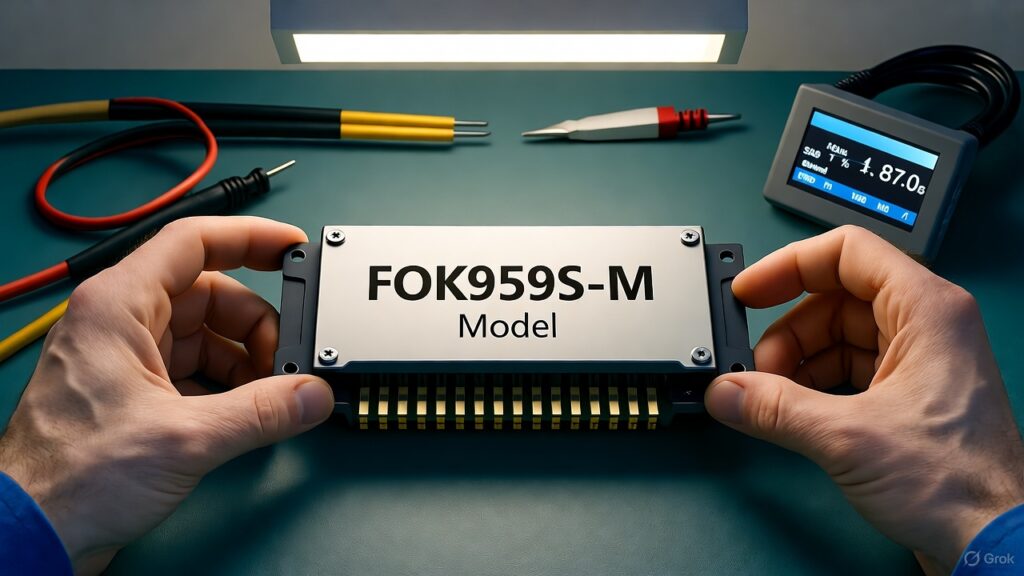
fok959s-m model explained: meaning & details guide
In today’s digital world, it’s common to stumble across unusual identifiers like “fok959s-m model” while browsing forums, device settings, or technical listings. At first glance, it looks like a product name or engineering code, but the reality is often more complex. These types of labels usually represent internal model identifiers, firmware tags, or placeholder codes used in development environments.
What makes them confusing is that they rarely come with public documentation. That leaves users trying to decode something that was never meant for general consumer interpretation. Let’s break it down in a practical, human-friendly way so you can understand what this kind of model string might actually represent and how to approach it when you encounter it.
What the “fok959s-m model” likely represents
When you see a structured alphanumeric label like this, it usually belongs to one of a few categories:
- Internal product or hardware model ID
- Firmware or software build reference
- Prototype naming convention
- Database placeholder or test entry
- Misinterpreted or partially copied identifier
Unlike commercial names (like “iPhone 15” or “Galaxy S24”), technical model codes are not designed for public branding. Instead, they help developers and manufacturers track versions, components, or configurations behind the scenes.
In the case of the fok959s-m model, there is no widely recognized public product tied to this exact identifier in official databases or manufacturer listings. That strongly suggests it may be:
- A backend development code
- A region-specific internal variant
- A mislabeled or truncated identifier
- Or even a dynamically generated system tag
From an SEO perspective, this type of keyword often gains traction when users encounter it in logs, apps, or unknown device fields and search for clarity.
Why model codes like this appear online
You might be surprised how often cryptic identifiers show up in everyday tech usage. They can appear in:
- Android system logs
- IoT device dashboards
- Browser developer tools
- API responses
- Software beta builds
- Debugging environments
I once came across a similar situation while checking a router’s diagnostic panel, where a completely unreadable model string appeared instead of the expected product name. It turned out to be a firmware-level identifier used only for the manufacturer’s internal tracking.
This is a common experience for technicians and even casual users who explore advanced settings without realizing the system is exposing backend data.
Real-world Why users search for it
Imagine this: you plug in a new device, install a driver, or open a system report, and instead of a clear name, you see “fok959s-m model” listed under hardware or software information.
Naturally, you go online searching for it because:
- You want to confirm if the device is legitimate
- You’re checking compatibility with software
- You suspect a driver issue
- Or you’re verifying if it’s safe
In most cases, users expect a clear product page or documentation. Instead, they often find scattered forum posts and SEO articles—many of which repeat the keyword without offering real clarity. That’s why understanding the nature of such identifiers is more useful than chasing an exact product match.
Comparison: Model codes vs commercial product names
To better understand where the confusion comes from, here’s a simple comparison of how structured model identifiers differ from consumer-facing names:
| Feature | Model Code (like fok959s-m) | Commercial Product Name |
|---|---|---|
| Purpose | Internal tracking, debugging | Marketing & branding |
| Readability | Low (alphanumeric) | High (user-friendly) |
| Documentation | Limited or private | Public and detailed |
| Stability | May change between builds | Usually consistent |
| User visibility | Rarely intended for users | Designed for customers |
This difference explains why users often struggle to find information about codes like this. They were never meant to function as searchable product identities.
How to investigate unknown model identifiers
If you encounter something like the fok959s-m model, here are practical steps to figure out what it might be:
1. Check the source location
Identify where you saw it:
- Device settings?
- Software log?
- Packaging label?
- Website or API response?
2. Look for surrounding context
Sometimes nearby text reveals more than the code itself—such as manufacturer names, version numbers, or hardware categories.
3. Search partial matches
Break the identifier into segments like:
- “fok959s”
- “959s-m”
- “model m variant”
This can sometimes reveal related systems or product families.
4. Use official support channels
If it’s tied to a device, manufacturer support is often the only reliable source.
Even though identifiers like this seem meaningless at first, they play an important role in the tech ecosystem. They allow:
- Precise version control across global systems
- Tracking hardware revisions
- Debugging software issues at scale
- Managing experimental builds before release
For engineers, a code like fok959s-m model could represent a very specific configuration that matters deeply in testing environments—even if it means nothing to the average user.
A unique insight you won’t usually hear
Most explanations stop at “it’s an internal code,” but there’s a deeper angle: ambiguous identifiers are often a sign that you’re interacting with layered technology systems. Modern apps and devices rarely show you the “real” backend structure unless something goes wrong or you enter developer mode.
Understanding this helps reduce confusion and also protects users from misinformation. Many fake websites exploit unknown model numbers to create the illusion of official product pages, even when no such product exists.
Also Read: Understanding 185.63.2653.200 IP Address Meaning
Conclusion
The fok959s-m model is best understood not as a consumer product, but as a technical-style identifier that likely originates from internal systems, firmware structures, or development environments. While it may appear confusing or even concerning at first, such codes are extremely common in modern computing.
Instead of searching for a direct product match, the smarter approach is to analyze context, verify the source, and understand how model naming works in technical ecosystems. Once you recognize the pattern, these mysterious identifiers become far less intimidating.
FAQs
1. Is the fok959s-m model a real product?
There is no verified public product associated with this exact model identifier. It likely belongs to an internal or technical system.
2. Why do I see unknown model codes on my device?
Devices often display backend identifiers used for debugging, firmware tracking, or system configuration.
3. Can the fok959s-m model be a virus or malware?
Not necessarily. A model code itself is not harmful, but if it appears in suspicious software, you should scan your system for security.
4. How can I find the real name of a model code?
Check device settings, manufacturer labels, or official support documentation for mapping between codes and product names.
5. Why are model codes so complicated?
They are designed for engineers and systems, not for users—hence the lack of readability.
6. Should I be worried if I see this identifier?
Usually no. It’s common in technical environments, especially in logs or advanced settings.







Post Comment