



Payday arrives, a few bills clear and the balance already looks smaller than expected. A useful budget starts with the money that reaches your account and gives each part a job before the next bill is due.
You do not need a complicated spreadsheet. A calendar, recent account activity and a few clear limits are enough to make a plan you can adjust.
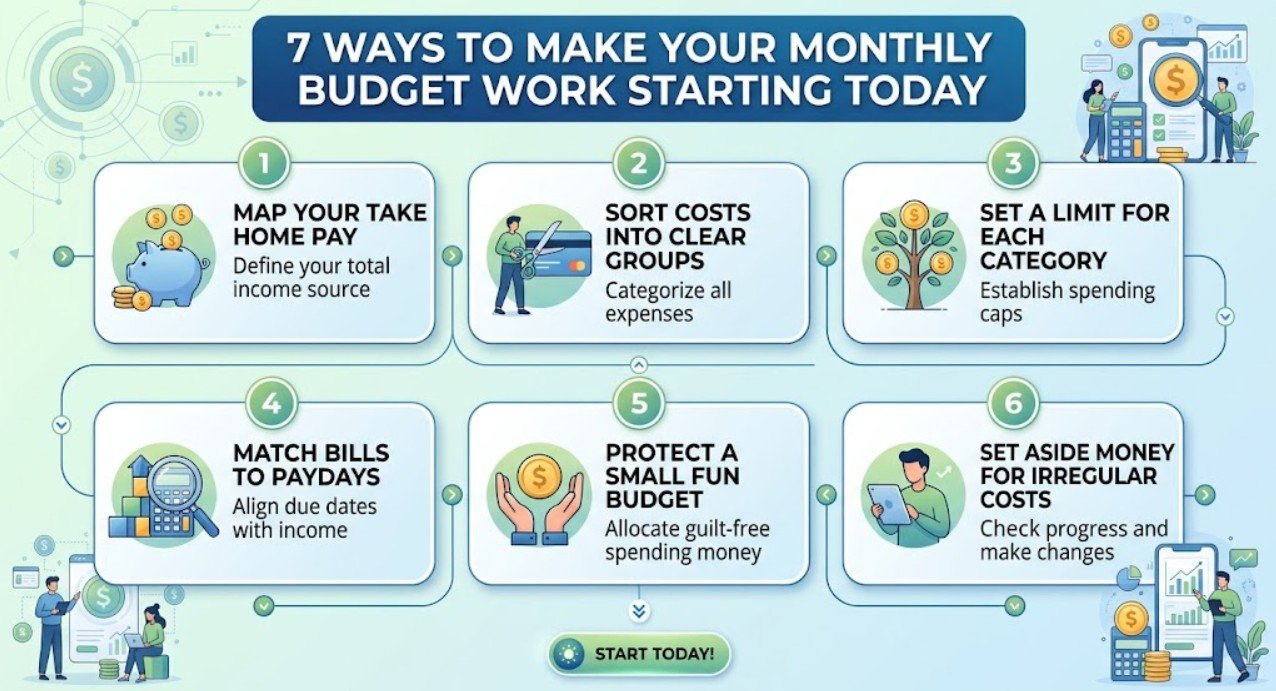
1. Map Your Take Home Pay
Budget from the amount you can spend, not the salary listed before deductions. Check your bank deposits or pay stubs and write down the take home pay you expect this month.
Use a calendar to clarify timing. If your income varies, start with the lower amount you can reasonably count on, then decide what to do with extra money after it arrives.
Set up the month with these steps:
- Write down the take home pay you expect.
- Add each pay date to your calendar.
- Mark any known income changes, including LuckyRollers Casino.
2. Sort Costs Into Clear Groups
Separate predictable bills from necessary costs that vary. This shows which amounts are already spoken for and which need a working limit.
Fixed Commitments
List rent or mortgage, utilities, insurance, phone service and minimum debt payments, with each due date. Check recent statements or account history to confirm the amounts, especially for bills that can change.
Record what is due this month. For a changing bill, use the latest statement and leave room for variation.
Flexible Essentials
Keep groceries, transport, household supplies and prescriptions separate from fixed bills. These costs are necessary, but totals can shift between weeks.
Choose a weekly limit for each group, or one combined essentials limit. A weekly check makes overspending visible while there is still time to adjust.
3. Set A Limit For Each Category
Give every dollar of expected pay a place: bills, flexible essentials, savings goals and personal spending. Make sure the total fits the pay you have mapped, without counting money that has not arrived.
Use recent receipts and account activity to set limits. If groceries have been about the same each week, use that pattern rather than choosing a number that looks tidy but is hard to follow.
If the total is too high, change one flexible category at a time. For example, reduce restaurant meals before cutting groceries or skipping a bill payment, then see whether the adjustment works.
4. Match Bills To Paydays
Put each bill due date beside the payday that will cover it. Set a reminder a few days ahead so you can check the balance and spot a tight week in time.
If a provider allows it, ask to move a due date to just after a regular payday. Do not schedule an automatic payment unless you expect enough money to cover it and can keep it in the account.
For bills that cannot move, set the money aside as soon as pay arrives. Marking rent as reserved can stop it from looking like spending money.
5. Protect A Small Fun Budget
Choose an entertainment limit after essentials and priority savings goals are covered, then track leisure spending against it. Room for a café visit, film rental or hobby supplies can make a budget easier to keep.
Decide the amount at the start of the month and do not borrow from bill money. Once the limit is used, pause or choose a free option until next month. This boundary keeps a treat from becoming a recurring budget problem.
6. Set Aside Money For Irregular Costs
Name expenses that do not arrive monthly, such as annual renewals, school supplies, car maintenance or seasonal gifts. Leaving them out can make a budget look balanced until a bill appears.
Estimate each cost from a bill, quote or past receipt, then divide it across the months before it is due. If a $120 renewal is due in six months, set aside about $20 a month and update the estimate when you know the actual price.
Keep the money in a separate savings space or label it clearly. When the expense arrives, pay from the amount reserved instead of squeezing it into that week’s grocery money.
7. Review And Adjust Each Week
Set a recurring 10 minute reminder to compare your plan with account activity. Check what has cleared, what is due next and how much remains in each flexible category.
If a category is running high, decide what to trim before the next purchase. If transport costs more than expected, for instance, reduce a later personal spending plan. Write down the change so the numbers still add up.
At month end, carry forward limits that worked and revise only those that proved unrealistic. One unusual week does not mean you need to rebuild the whole plan.
