



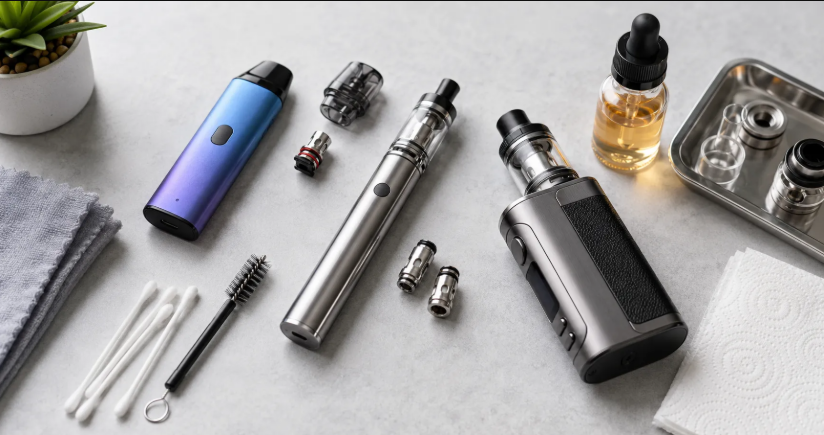
Have you ever wondered why the materials used inside an electronic device matter as much as its appearance? A product may look well made, but its performance also depends on how its components work together. In electronic vaporizers, the wrong material combination can lead to leaks, corrosion, damaged seals, or other product failures.
These issues are not always visible when someone first examines a device. They can develop through contact with liquids, repeated heating, or everyday handling. For manufacturers, choosing suitable materials is therefore an important part of product design. It helps address practical engineering challenges before a device reaches the market.
Understanding Material Compatibility in Electronic Vaporizers
Material compatibility describes how different materials interact under expected conditions. In electronic vaporizers, designers must consider the relationship between the housing, seals, liquid-contact components, heating elements, electrical connections, and other internal parts.
Each material has different properties. Some plastics tolerate certain liquids but become brittle when exposed to others. Some metals resist corrosion in particular environments but may react under different conditions. Rubber and elastomer seals can also swell, shrink, or lose flexibility when exposed to incompatible substances.
These differences matter because a device is made from several connected components rather than one material. A suitable design must account for the complete system, including temperature changes, mechanical stress, and the substances that contact each part.
1. Why Material Selection Affects Product Reliability
Material selection begins with understanding how a component will be used. Designers need to consider its function, the conditions it will experience, and how long it must maintain its intended properties.
For example, seals must remain flexible enough to prevent leaks. Housing materials need to withstand normal handling without cracking easily. Electrical insulation must maintain its protective properties under the conditions specified for the device.
If these requirements are overlooked, problems may appear after manufacturing. A seal could deteriorate, a plastic component could deform, or a connection could become less reliable.
Manufacturers can reduce these risks by evaluating:
- Chemical resistance to liquids and cleaning substances that may contact the component
- Temperature tolerance under expected operating conditions
- Mechanical strength and resistance to wear
- Electrical insulation and conductivity requirements
- Long-term stability during storage and use
These checks help engineers select materials based on evidence rather than appearance or cost alone.
2. How Liquid Contact and Heat Affect Materials
Electronic vaporizers may contain several materials that come into contact with liquids or experience changes in temperature. Compatibility testing helps determine whether those materials remain suitable throughout their intended service conditions.
Liquid composition matters because different substances can affect plastics, metals, adhesives, and elastomers in different ways. A material that performs well with one formulation may not behave the same way with another.
Heat introduces another consideration. Repeated temperature changes can cause materials to expand and contract at different rates. Over time, these differences may place stress on joints, seals, and connected components.
Designers should therefore assess material performance under realistic, controlled test conditions. A single visual inspection cannot establish whether a material will remain stable after repeated exposure.
How Better Material Compatibility Supports Safer Design
A reliable product design requires more than selecting individual components that appear suitable on their own. Engineers must also understand how those components interact as a complete assembly.
This is particularly important for compact electronic devices, where multiple parts are arranged within limited space. A small change in one component can affect neighboring parts, seals, or electrical connections.
3. Testing Materials Before Production
Testing allows manufacturers to identify potential weaknesses before products enter mass production. It also provides evidence that materials are appropriate for their intended functions.
A structured testing process may include chemical compatibility assessments, temperature cycling, leak testing, mechanical stress tests, and inspections after exposure to relevant conditions.
For example, when reviewing products such as Mr fog vapes, engineers should rely on verified design documentation and testing evidence rather than assuming that similar-looking devices use identical materials.
Likewise, the North Stellar Dark Moon Edition should be evaluated according to its actual construction and intended operating conditions. A product name or external appearance does not establish which materials are used internally or whether their compatibility has been verified.
A practical testing plan should include:
- Reviewing material specifications from suppliers
- Identifying potential contact between liquids and components
- Testing seals and joints under defined conditions
- Inspecting parts for deformation, corrosion, or deterioration
- Documenting results and investigating unexpected failures
Testing requirements should reflect the device’s design and applicable safety standards.
4. Balancing Material Performance, Cost, and Design
Material decisions also affect manufacturing costs, assembly methods, product weight, and waste. A material that performs well in one area may introduce challenges elsewhere.
For example, a durable component may cost more initially but reduce failures during testing or production. A lighter material may simplify handling, but engineers still need to confirm that it provides the required strength and chemical resistance.
Product development teams should compare materials using measurable criteria instead of focusing on price alone. Supplier documentation, production consistency, test results, and relevant regulatory requirements all help inform the decision.
When discussing products such as Fruitia X Fifty Bar, businesses should avoid making specific claims about internal materials without reliable supporting information. Clear documentation helps distinguish verified engineering facts from assumptions based on branding or appearance.
Conclusion
Material compatibility is an important part of electronic vaporizer design because different components must work together under expected conditions. Chemical exposure, heat, mechanical stress, and long-term storage can all affect material performance.
By choosing appropriate materials, testing component interactions, and documenting results, manufacturers can identify potential problems earlier in the development process. These practices also support more consistent production and informed quality-control decisions.
Ultimately, good material selection is not simply about choosing strong or inexpensive components. It is about understanding how each material behaves within the complete device and ensuring that the finished design meets its intended requirements.
