



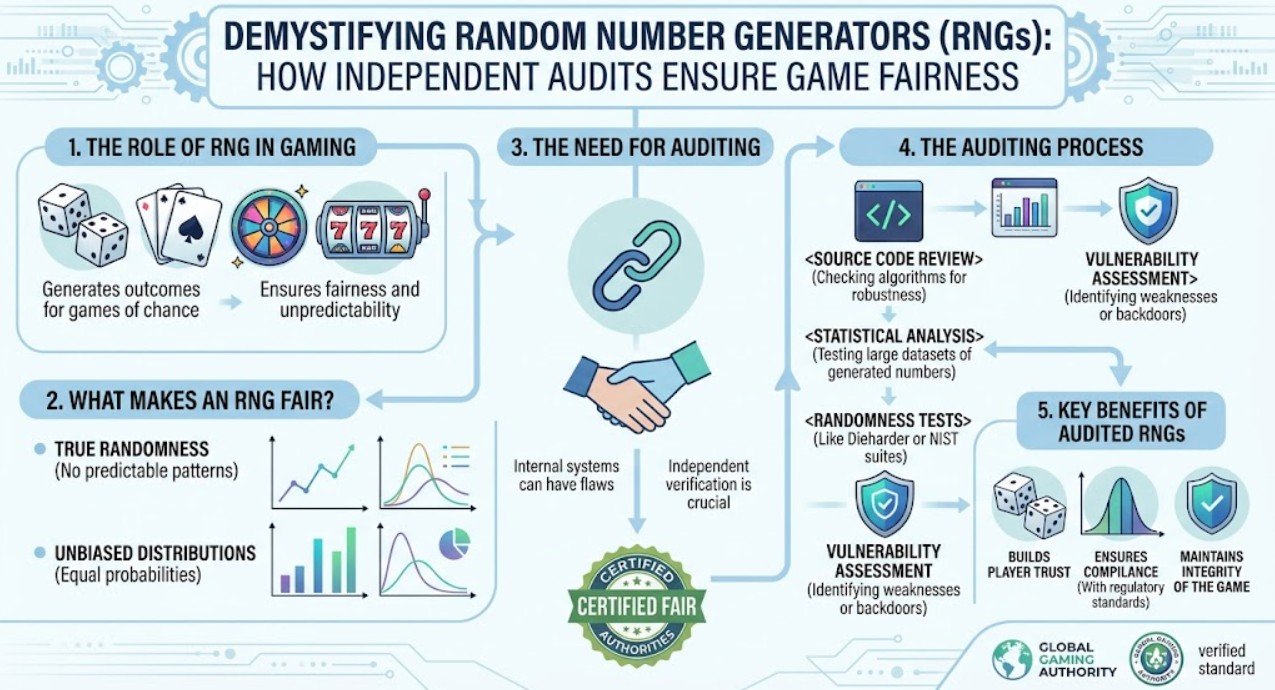
When playing physical card or table games, fairness is easy to observe. You can watch a dealer shuffle a physical deck of cards, see a roulette ball bounce naturally across pocket dividers or inspect dice before a roll. In the digital world, however, physical mechanics are replaced by lines of code and computer algorithms executing thousands of operations per second behind a sleek touchscreen interface.
Hardware RNGs vs. Pseudo-Random Number Generators (PRNGs)
For many digital players, this transition raises a fundamental question: how can you be certain that an online card deal, slot spin or virtual outcome is genuinely random? The answer lies in Random Number Generators (RNGs) – sophisticated mathematical algorithms that serve as the invisible backbone of modern software. Whether you are using custom sticker creation algorithms, playing indie puzzle games or testing your luck on a regulated entertainment venue like Casino Cashy, certified RNG technology guarantees that every digital result remains entirely unpredictable, tamper-proof and statistically fair.
To understand how software creates unpredictable outcomes, it helps to distinguish between physical hardware randomness and algorithmic digital generation.
While true Hardware Random Number Generators (TRNGs) measure unpredictable physical phenomena, such as thermal microscopic noise or radioactive decay, digital software applications rely primarily on Advanced Pseudo-Random Number Generators (PRNGs). Modern PRNGs use complex mathematical formulas that produce long sequences of numbers so statistically chaotic that they are functionally indistinguishable from true physical randomness.
Here is a side-by-side comparison of True Hardware RNGs versus Digital PRNG Systems:
| System Attribute | True Hardware RNG (TRNG) | Digital Pseudo-Random Generator (PRNG) |
|---|---|---|
| Source of Randomness | Physical environmental noise (thermal fluctuation, electronic interference) | Mathematical seed algorithms and high-frequency clock values |
| Execution Speed | Moderate speed; constrained by physical reading hardware | Ultra-fast; capable of generating millions of chaotic values per second |
| Primary Digital Use | High-level cryptographic key creation and security hardware | Core game mechanics, digital shuffling and online play algorithms |
| Statistical Integrity | Completely non-deterministic and impossible to replicate | Passes rigorous statistical randomness tests (e.g., Diehard Battery Tests) |
Three Steps to Guaranteeing Digital Game Fairness
Creating a fair digital environment requires more than just writing code; it involves continuous testing, seed isolation and independent verification.
Engineers follow strict operational standards to ensure that game servers cannot manipulate outcomes after a player initiates an action.
Here are the three primary stages that safeguard digital RNG systems:
- High-Entropy Seed Initialization: The algorithm combines multiple unpredictable inputs, such as system clock microseconds, server memory usage and hardware state, to create a random “seed” value that initiates the number sequence.
- Instant Value Mapping: The RNG continuously generates numbers in the background. The exact millisecond a player taps “Spin” or “Deal,” the software selects the current number sequence and maps it directly to a specific card, symbol or wheel outcome.
- Independent Third-Party Auditing: Recognized testing laboratories independently audit backend code, running millions of test spins to verify that payout distributions match theoretical models without bias or drift.
How Regulated Platforms Demonstrate Transparency
In modern iGaming and digital entertainment, player trust is built on verifiable compliance rather than unbacked claims.
Leading entertainment platforms proudly display their testing credentials, offering clear visibility into their software standards. Portals maintain high transparency standards by partnering with certified software providers whose RNG engines undergo routine inspection by accredited global testing agencies like eCOGRA, iTech Labs or GLI.
- Displayed Compliance Seals: Footer links and game info screens link directly to official certificates of RNG randomness issued by accredited testing labs.
- Provably Fair Cryptographic Verification: Next-generation games allow users to manually inspect cryptographic hash keys (server seeds and client seeds) to verify outcome integrity on-chain or via public tools.
- Tamper-Proof Cloud Hosting: Game logic runs on secure, isolated servers, preventing local browser tampering, player cheats or unauthorized internal changes.
Tips for Ensuring a Safe and Fair Digital Experience
Understanding how digital fairness works helps you navigate online entertainment with confidence and peace of mind.
A few basic safety practices ensure that your digital recreation remains secure, fair and fun.
- Play on Licensed Platforms: Always verify that an entertainment platform holds a valid operating license from a recognized regulatory authority.
- Look for Independent Testing Logos: Check for certification badges from independent laboratories like eCOGRA, GLI or iTech Labs before creating an account.
- Treat Games as Pure Recreation: Remember that certified RNGs guarantee complete statistical independence; every spin or hand is entirely separate from past results, meaning “due wins” do not exist in random systems.
